 Sanjay OrugantiResearch Scientist · Rensselaer Polytechnic Institute
Research
How can a robot learn from what we tell and show it, explain itself, and be trusted as a teammate?
Today, changing what a robot does takes a specialist. I want the person who knows the job to be able to teach it.
OntoAgentic AI is the core system running HARMONIC. Try LEIAMIOnA (Minimal Instantiation of OntoAgent) here.
Teach LEIAMIOnA on this page No LLM inside. Runs in your browser.
Type a question, or click one of the examples. If LEIAMIOnA does not understand, it says so and asks, and you can teach it. Under each answer, “Show how I understood this” opens the words, the meanings, the rule it used and the answer.
HARMONICMIOnA is a minimal instantiation of HARMONIC. Click a goal above the room: LEIAMIOnA plans it as commands, and the robot carries them out one at a time.
Ask about the work and learn about me
Teach it a word, then ask why in this order
Find its limits
Animated room, HARMONICMIOnA: a small room with a robot, a table, a shelf, a crate, an engine, a dock and you. LEIAMIOnA turns a request into a plan of commands and the robot carries them out one at a time. It is a minimal instantiation of HARMONIC, the architecture Sanjay Oruganti designed for robots that work in teams with people, which runs the cognitive architecture OntoAgent, developed at LEIA Lab.
Read about HARMONICLEIAMIOnA’s plan strategic layerthe plan appears here, one command per box
What is sent to the robot the blackboard between the layersthe command in force appears here
What the robot is doing now tactical layer: a behavior treeits conditions and actions appear here
More to try
LEIAMIOnA is a minimal instantiation of OntoAgent, and HARMONICMIOnA of HARMONIC: small on purpose, with no LLM inside, and what you teach stays in your browser. OntoAgent, the full architecture, was developed by Sergei Nirenburg, Marjorie McShane, Jesse English, Sanjay Oruganti and many students at the LEIA Lab. Sanjay added the physical AI dimension to it: robots, through HARMONIC. Meet OntoAgent →
What I work on
-
Cognitive robots as teammates
Robots that reason about goals and plans, talk with the people they work with, and act on real hardware.
Animated figure: a person and a robot build one thing together, handing parts to each other. This is the aim of HARMONIC, the architecture Sanjay Oruganti designed for robots that work in teams with people. HARMONIC runs the cognitive architecture OntoAgent, developed at LEIA Lab, so the robot can reason about goals and plans, talk with the people it works with, and act on real hardware. LEIA Lab, RPI · 2023 – present
-
Learning from instruction and demonstration
A person teaches a new procedure in plain language and by demonstration. The robot learns it, asks when it is unsure, and carries it out safely.
Animated figure: a person explains a task, then demonstrates it, and the robot copies it. In Sanjay Oruganti's work on HARMONIC, which runs the cognitive architecture OntoAgent, developed at LEIA Lab, a person teaches a robot a new procedure in plain language and by demonstration; the robot learns it, asks when it is unsure, and carries it out safely. LEIA Lab, RPI · 2023 – present
-
Trust, explanation, and metacognition
Robots that check what they know before they act, and can explain what they did and why.
Animated figure: a robot asks itself whether it knows enough, decides that it does, acts, and then explains aloud to the person beside it what it did. In Sanjay Oruganti's work on HARMONIC, which runs the cognitive architecture OntoAgent, developed at LEIA Lab, robots check what they know before they act, and can explain what they did and why. LEIA Lab, RPI · 2023 – present
-
Knowledge sharing in robot teams
Robots that pass skills to one another during a mission, by asking a teammate or by overhearing one.
Animated figure: a team of ground robots and drones; a brief link appears when one robot passes what it knows to another. This is Sanjay Oruganti's Ph.D. research at the University of Georgia (KT-BT and IKT-BT): robots that pass skills to one another during a mission, by asking a teammate or by overhearing one. HeRo Lab and DICE Lab, University of Georgia · 2017 – 2023
-
Biomedical and optical sensing devices
Portable devices that read scattered light to characterize aerosol particles and respiratory bacteria, with machine learning to interpret the readings.
Animated figure: a person breathes into a handheld device, which reads the breath and shows either a healthy result or an abnormal one with a warning. This is Sanjay Oruganti's work on portable optical devices (US Patent 11,957,447) that read scattered light to characterize aerosol particles and respiratory bacteria, with machine learning to interpret the readings. DICE Lab, University of Georgia · 2019 – 2025
-
Self-organization and swarms
Earlier work on how order emerges in biological systems and in robot swarms.
Animated figure: microtubules grow and shrink as units join and leave them, a motor protein walks along one with its cargo, and other proteins bind and come off. This is Sanjay Oruganti's earlier work at the University of Georgia on how order emerges in biological systems, such as microtubule self-organization, and in robot swarms. University of Georgia · 2015 – 2022
Projects
-
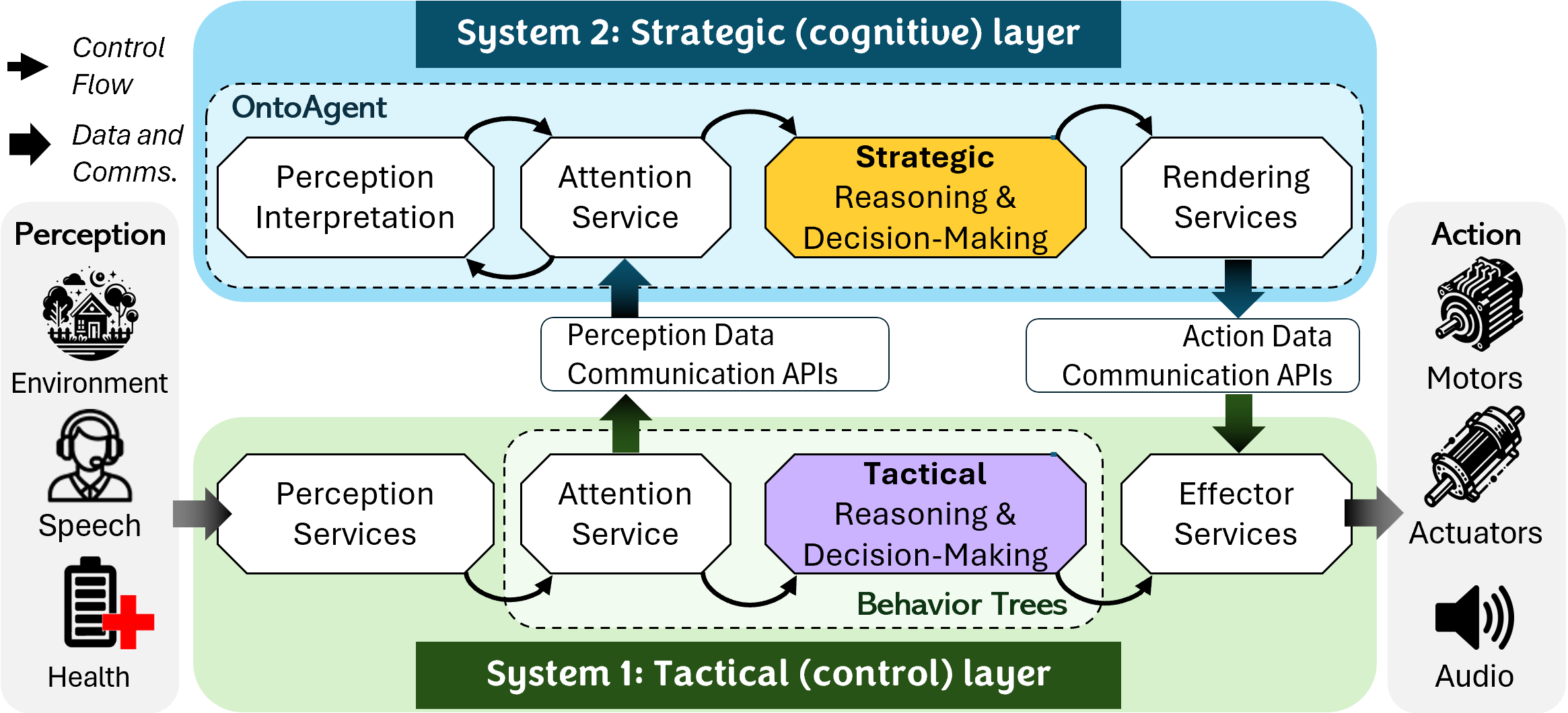 HARMONIC
A cognitive architecture for robots that work in teams with people.
Patent pending
-
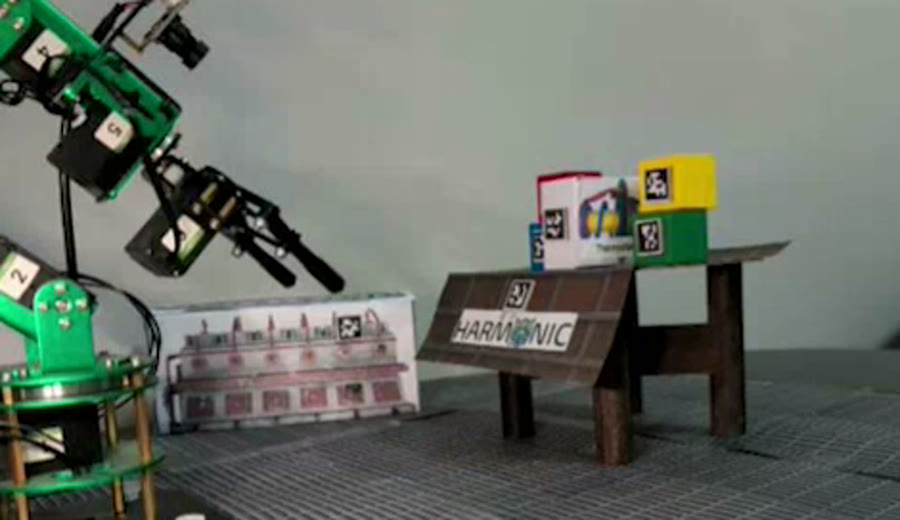 Why Cognitive Robotics Matters
Can a language model stand in for a cognitive architecture when a robot team’s task is safety-critical?
-
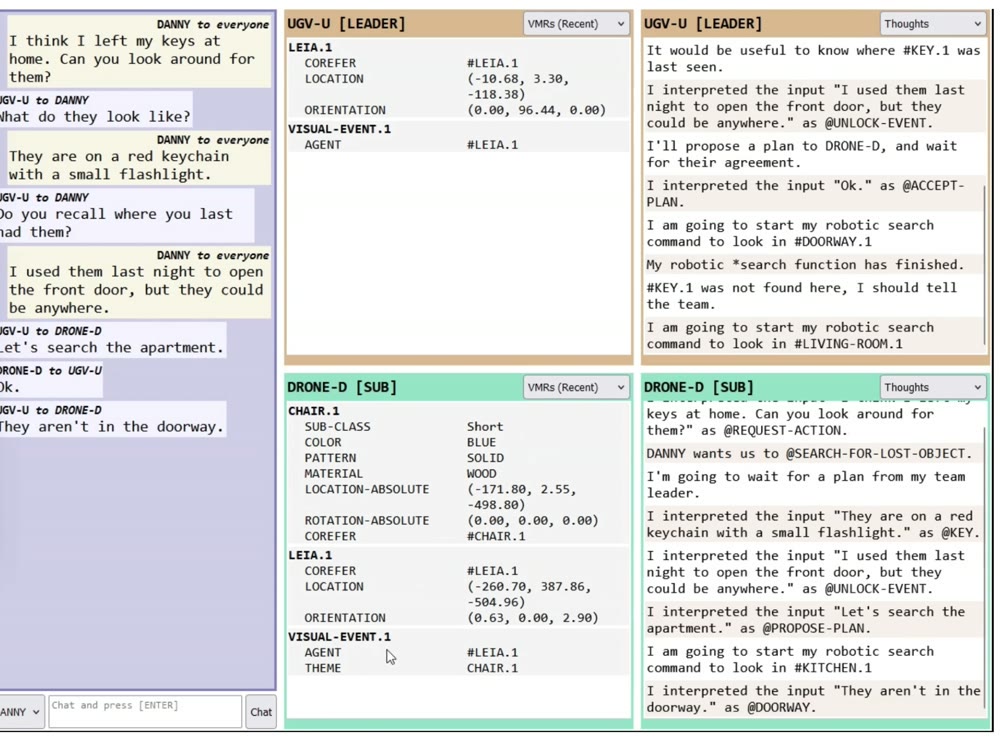 Metacognition and transparency
Robots that know the limits of what they know and show their reasoning to teammates.
-
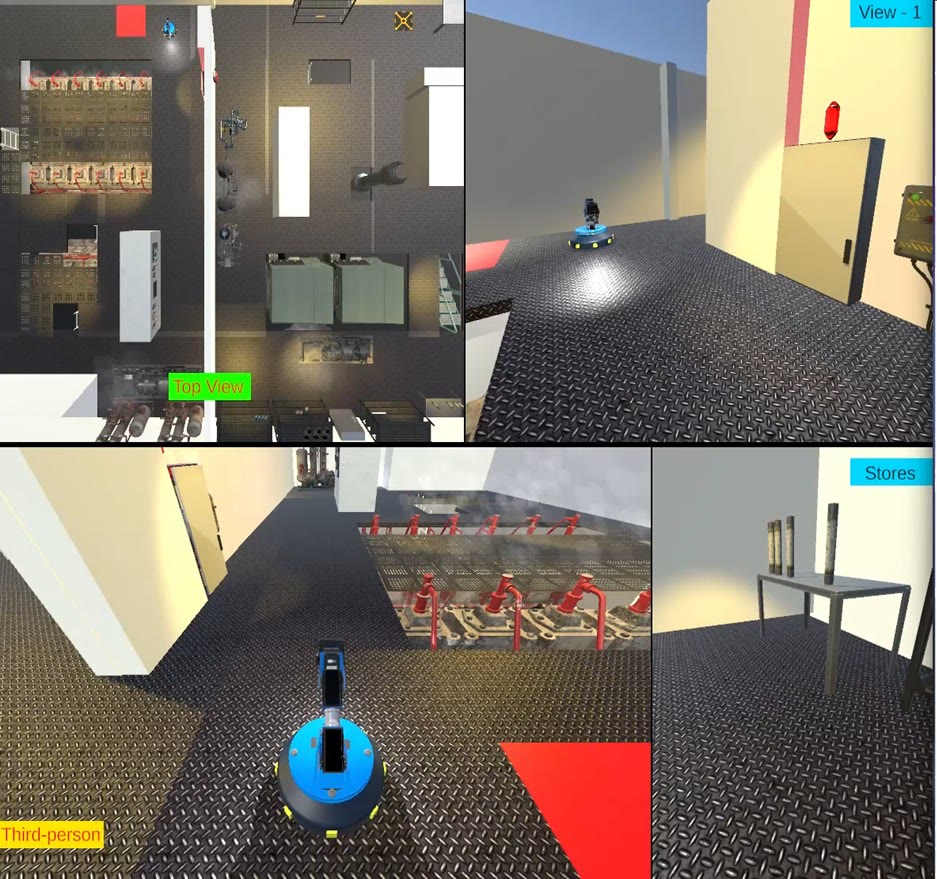 Teaching through instruction
A person teaches the robot a new procedure in plain language.
-
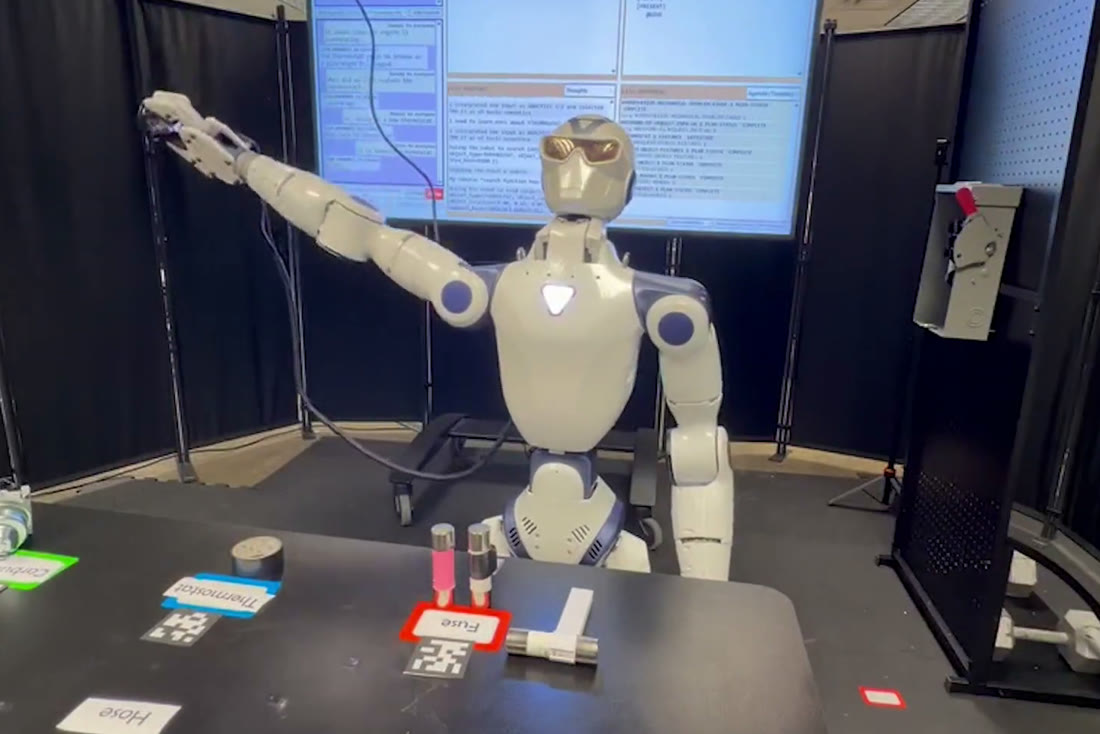 Shipboard maintenance
A robot and a technician work out why an engine is overheating and replace the part.
-
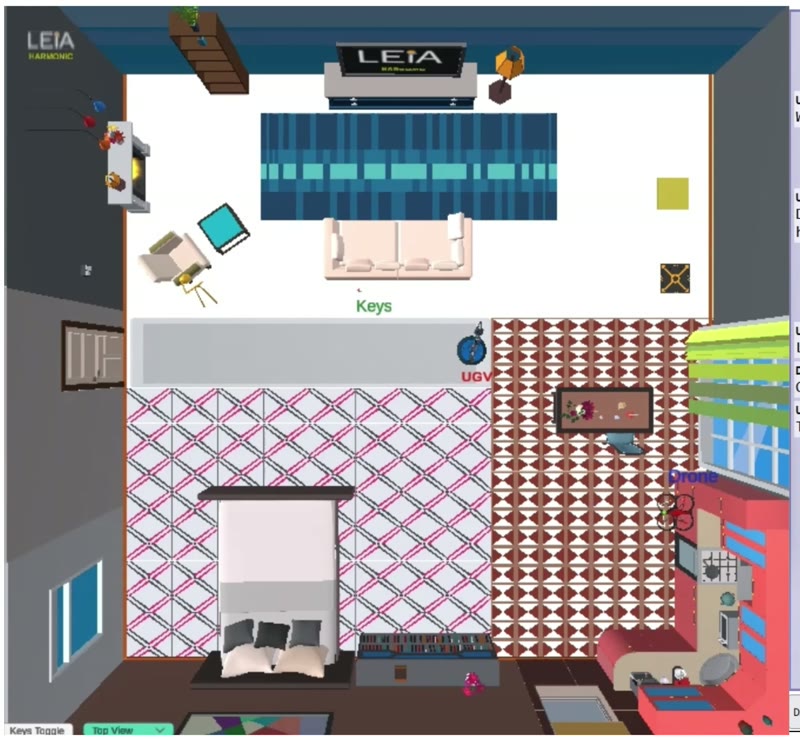 Multi-robot search
A ground robot and a drone search for a lost object with a human operator.
-
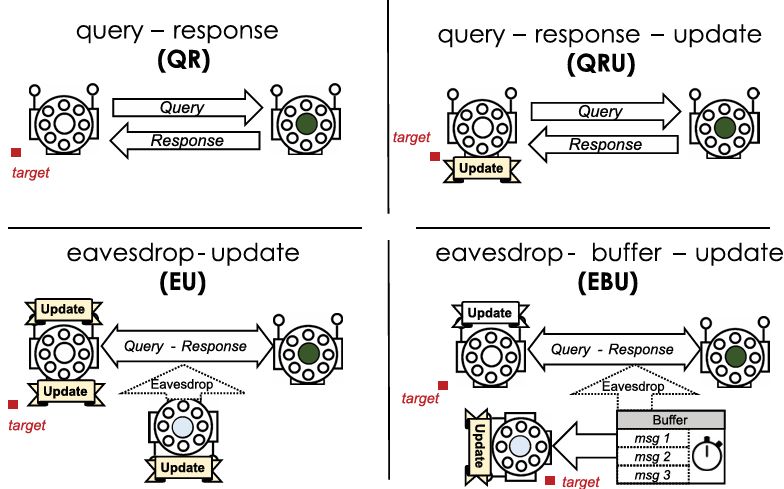 IKT-BT
Robots that learn by overhearing their teammates.
-
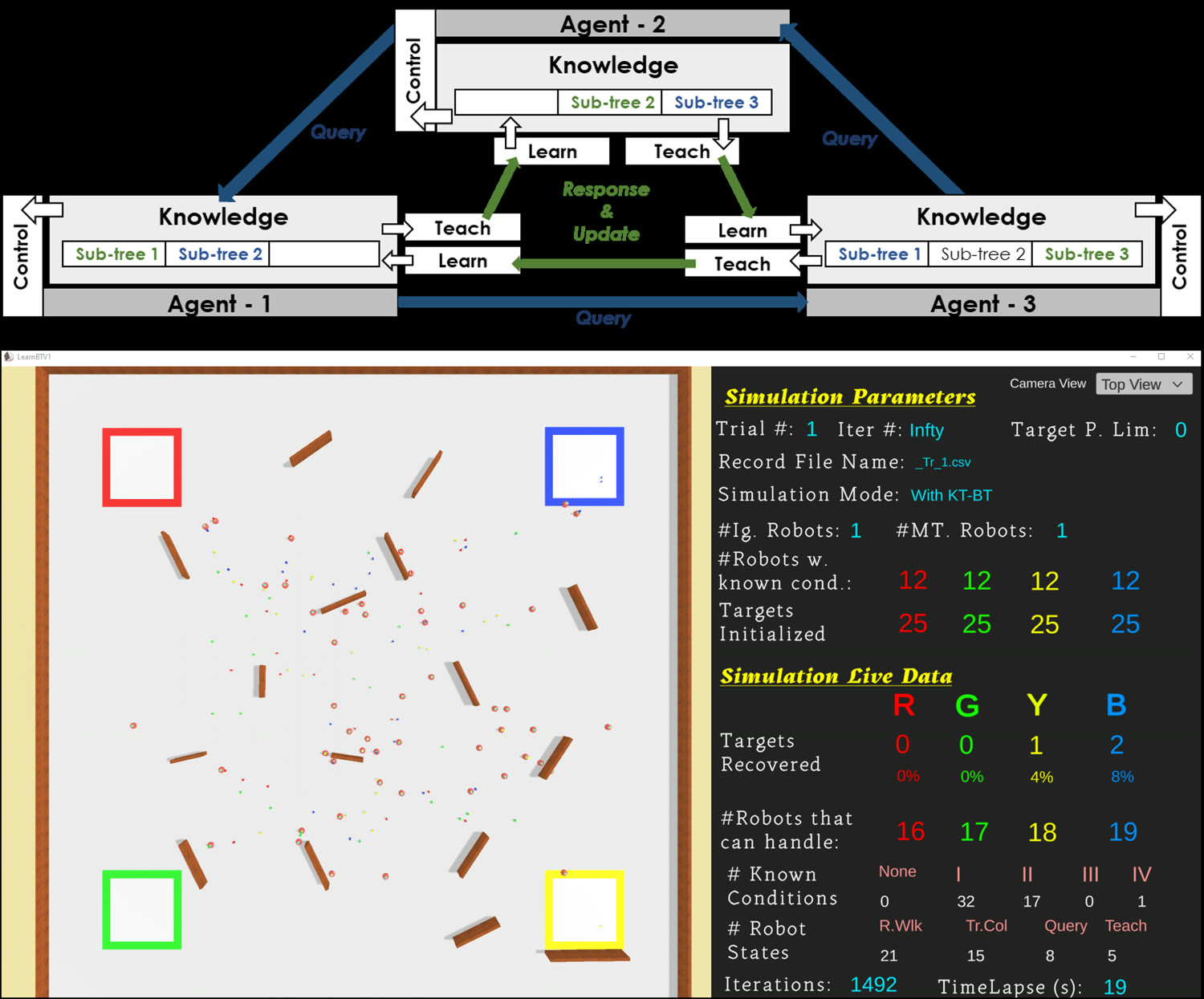 KT-BT
Robots that teach each other new behaviors during a mission.
-
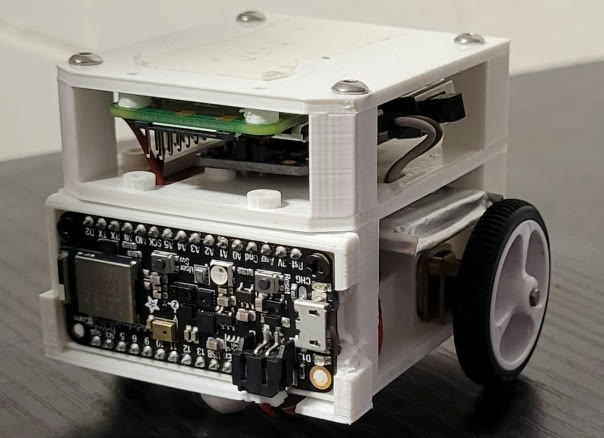 HeRoSwarm
A miniature open-source swarm robot, built with students I mentored.
-
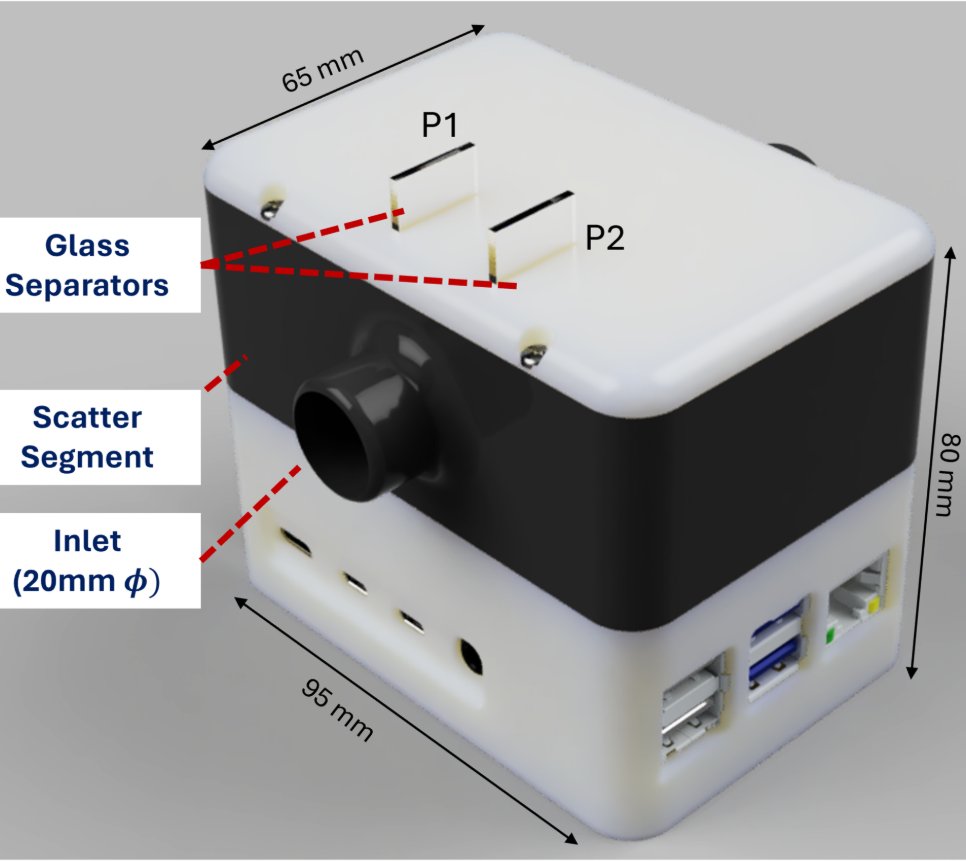 Optical scatter device
A hand-sized device that reads scattered light to characterize particles and bacteria in breath.
US Patent 11,957,447
Dissertation
Exploiting Emergence, Heterogeneity, and Knowledge Transfer in Multi-Agent Systems
Three studies of teams of unlike agents: how collective behavior emerges, how differences in what agents know change a mission, and how agents can pass knowledge to one another.